
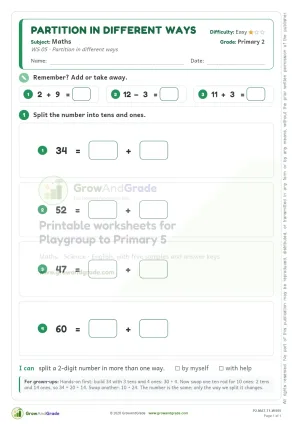
 Page 1 of 1 · watermarked preview
FREE
Easy level Answer key included
Grade 2 Maths: Partition in different ways (Easy)
Partition in different ways. A printable Primary 2 Maths worksheet for ages 6½–7½, easy level. The child partitions two-digit numbers into tens and ones (34 = 30 + 4) and in other ways by exchanging a ten for ones (34 = 20 + 14).
- Grade
- Grade 2 (Primary 2)
- Ages
- 6–7
- Subject
- Maths
- Topic
- Place value
- Level
- Easy
- Pages
- 1
- Format
- PDF (A4 / Letter)
- Answer key
- Yes
Get it in a pack
Every level of each worksheet and the answer keys, for less than the sheets one by one.
Term 1 pack
Save 41%All of Grade 2 Term 1
Maths · every unit of the term
$6.99 Bought separately $11.88
About this worksheet
What your child practises: The child partitions two-digit numbers into tens and ones (34 = 30 + 4) and in other ways by exchanging a ten for ones (34 = 20 + 14).
How to use it: Hands-on first: build 34 with 3 tens and 4 ones: 30 + 4. Now swap one ten rod for 10 ones: 2 tens and 14 ones, so 34 = 20 + 14. Swap another: 10 + 24. The number is the same; only the way we split it changes.
Level: Easy, for children working with lots of help. This worksheet also comes in Moderate and Difficult levels.
What's included: 1 printable A4 page and an answer key.
Curriculum links
- England Y2: partition numbers in different ways
- Cambridge 2Np.03 (regroup)
- Common Core State Standards 2.NBT.1
- DfE 2NPV-1
These show where the worksheet fits in each curriculum. They are a guide, not an official endorsement.
Print at home or in class on A4 or Letter paper. The answer key is a separate PDF so children can work without seeing the answers.
Rate this worksheet
Sign in to rate this worksheet after you've used it. Ratings come only from families and teachers who downloaded it.
Part of a learning unit · Term 1: Bridge & foundation
Place value
- Tens and ones; zero holds a place (Easy)
- Partition in different ways (Easy) (this worksheet)
- The nearest ten (Easy)
Work through them in order: each one builds on the one before.
More Maths worksheets
See all
FREE · LOGIN
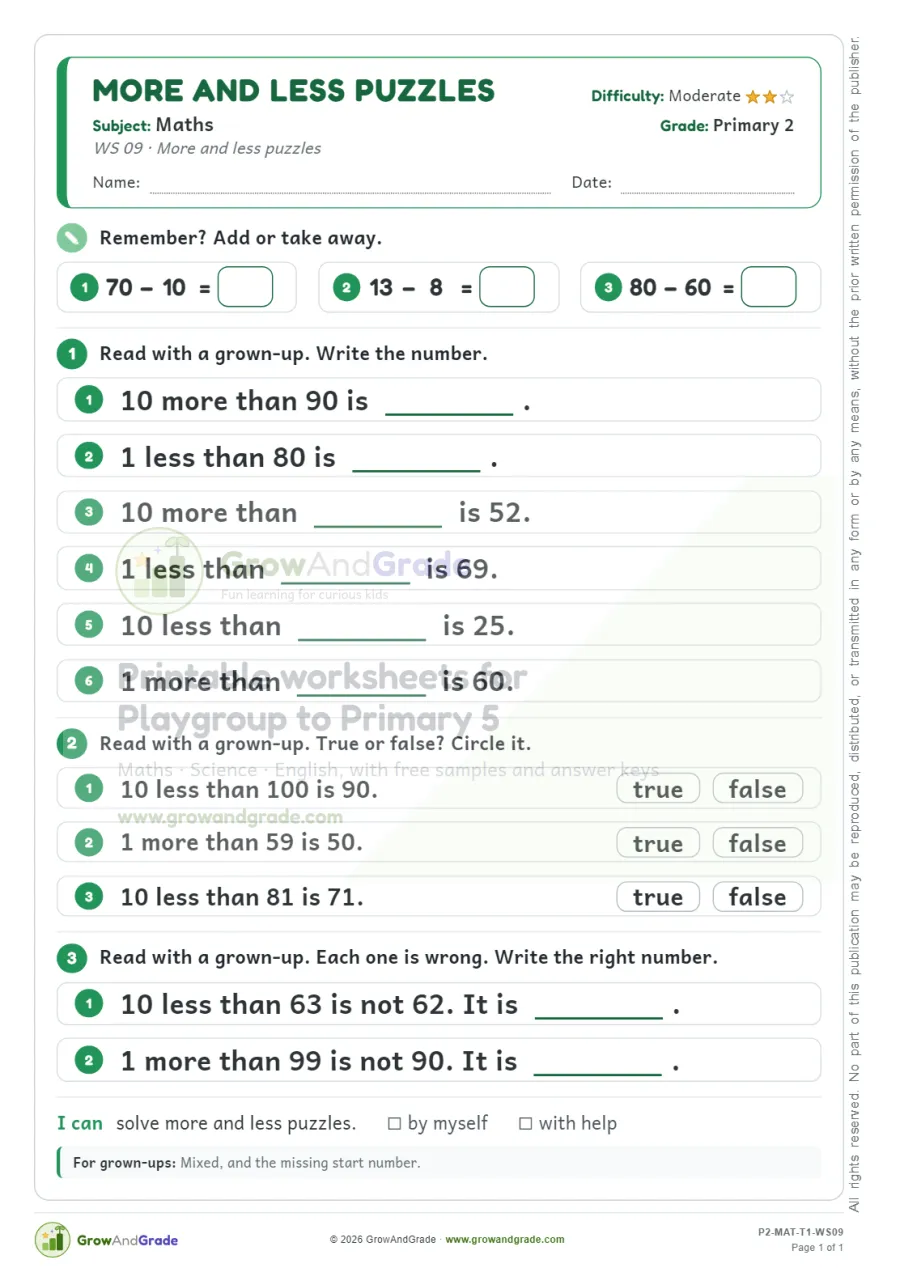
Grade 2 · Maths · Moderate
More and less puzzles (Moderate)
Free with account
FREE
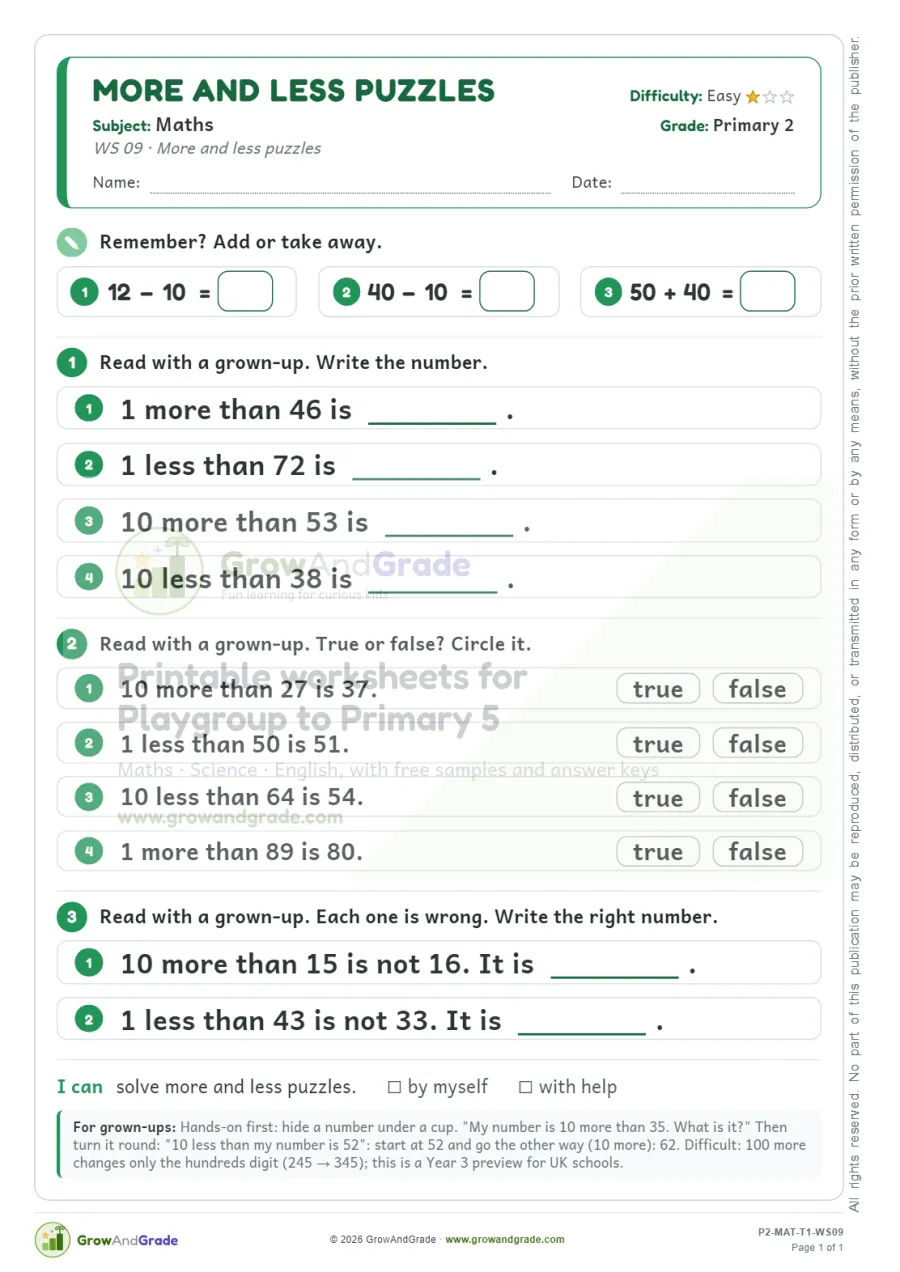
Grade 2 · Maths · Easy
More and less puzzles (Easy)
Free download
FREE · LOGIN
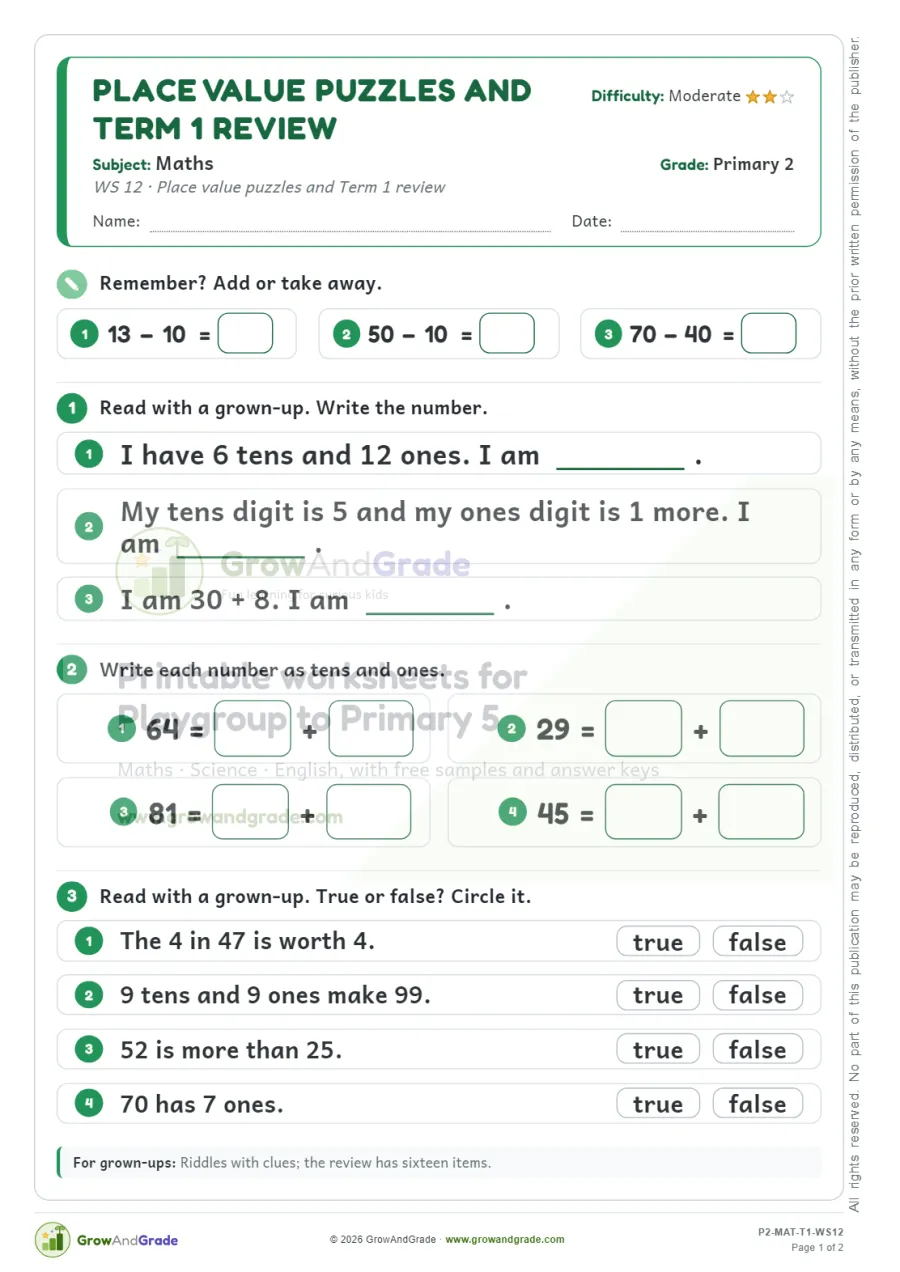
Grade 2 · Maths · Moderate
Place value puzzles and Term 1 review (Moderate)
Free with account
FREE
Grade 2 · Maths · Easy