
 Page 1 of 1 · watermarked preview
FREE
Easy level Answer key included
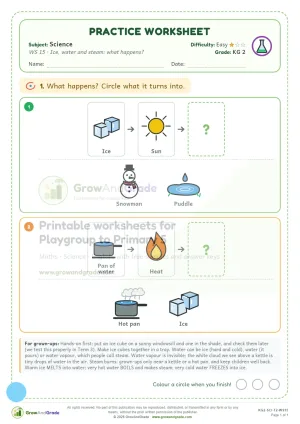
Kindergarten Science: Ice, water and steam: what happens? Melting, freezing, boiling (Easy)
Ice, water and steam: what happens? Melting, freezing, boiling. A printable Kindergarten 2 Science worksheet for ages 4½–5½, easy level. The child says what water turns into when it is warmed, heated or frozen: ice melts, water boils into steam, water freezes into ice (apply).
- Grade
- Kindergarten (Kindergarten 2)
- Ages
- 4–5
- Subject
- Science
- Topic
- Materials
- Level
- Easy
- Pages
- 1
- Format
- PDF (A4 / Letter)
- Answer key
- Yes
Get it in a pack
Every level of each worksheet and the answer keys, for less than the sheets one by one.
Term 2 pack
Save 38%All of Kindergarten Term 2
Science · every unit of the term
$7.99 Bought separately $12.87
About this worksheet
What your child practises: The child says what water turns into when it is warmed, heated or frozen: ice melts, water boils into steam, water freezes into ice (apply).
How to use it: Hands-on first: put an ice cube on a sunny windowsill and one in the shade, and check them later (we test this properly in Term 3). Make ice cubes together in a tray. Water can be ice (hard and cold), water (it pours) or water vapour, which people call steam. Water vapour is invisible; the white cloud we see above a kettle is tiny drops of water in the air. Steam burns: grown-ups only near a kettle or a hot pan, and keep children well back. Warm ice MELTS into water; very hot water BOILS and makes steam; very cold water FREEZES into ice.
Level: Easy, for children working with lots of help. This worksheet also comes in Moderate and Difficult levels.
What's included: 1 printable A4 page and an answer key.
Skills practised
- Water as ice (solid), water (liquid) and water vapour (gas)
- Melting, freezing and boiling
Curriculum links
- EYFS Early Learning Goal The Natural World: understand some important processes and changes, including changing states of matter
- Development Matters (EYFS) Reception: explore how things work; talk about the differences between materials and changes they notice
- Next Generation Science Standards K-PS3-1: the sun warms the Earth (ice melts in the sun)
- Cambridge Early Years: Understanding the world (scientific thinking) (EY2–EY3)
- Pearson iPrimary Early Years: The World Around Us (R2)
These show where the worksheet fits in each curriculum. They are a guide, not an official endorsement.
Print at home or in class on A4 or Letter paper. The answer key is a separate PDF so children can work without seeing the answers.
Rate this worksheet
Sign in to rate this worksheet after you've used it. Ratings come only from families and teachers who downloaded it.
Part of a learning unit · Term 2: Sentences & numbers to 20
Ice, water and steam
- Ice, water and steam: find the same (Easy)
- Ice, water and steam: sort the pictures (Easy)
- Ice, water and steam: what happens? Melting, freezing, boiling (Easy) (this worksheet)
Work through them in order: each one builds on the one before.
More Science worksheets
See all
PREMIUM
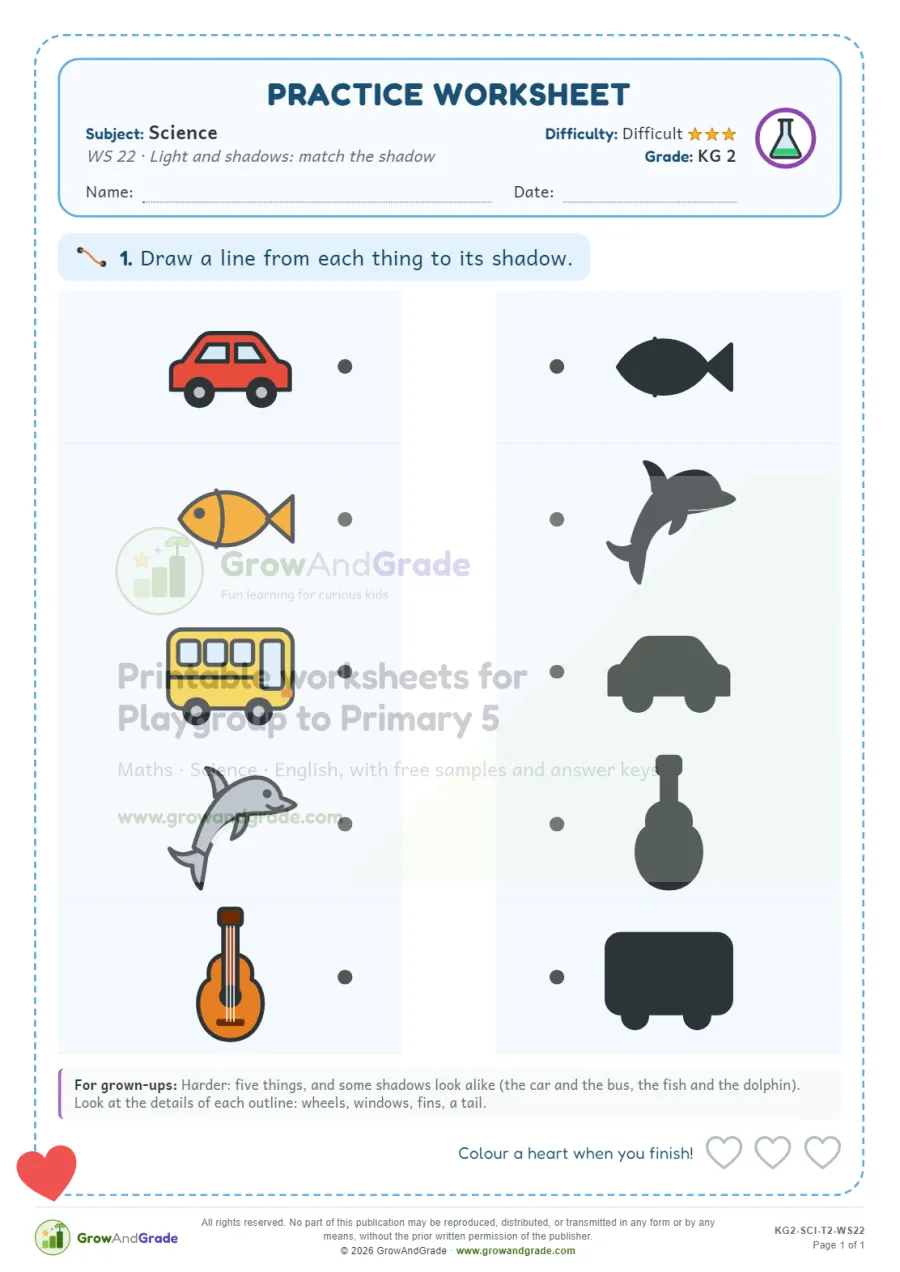
Kindergarten · Science · Difficult
Light and shadows: match the shadow (Difficult)
$0.99
FREE · LOGIN
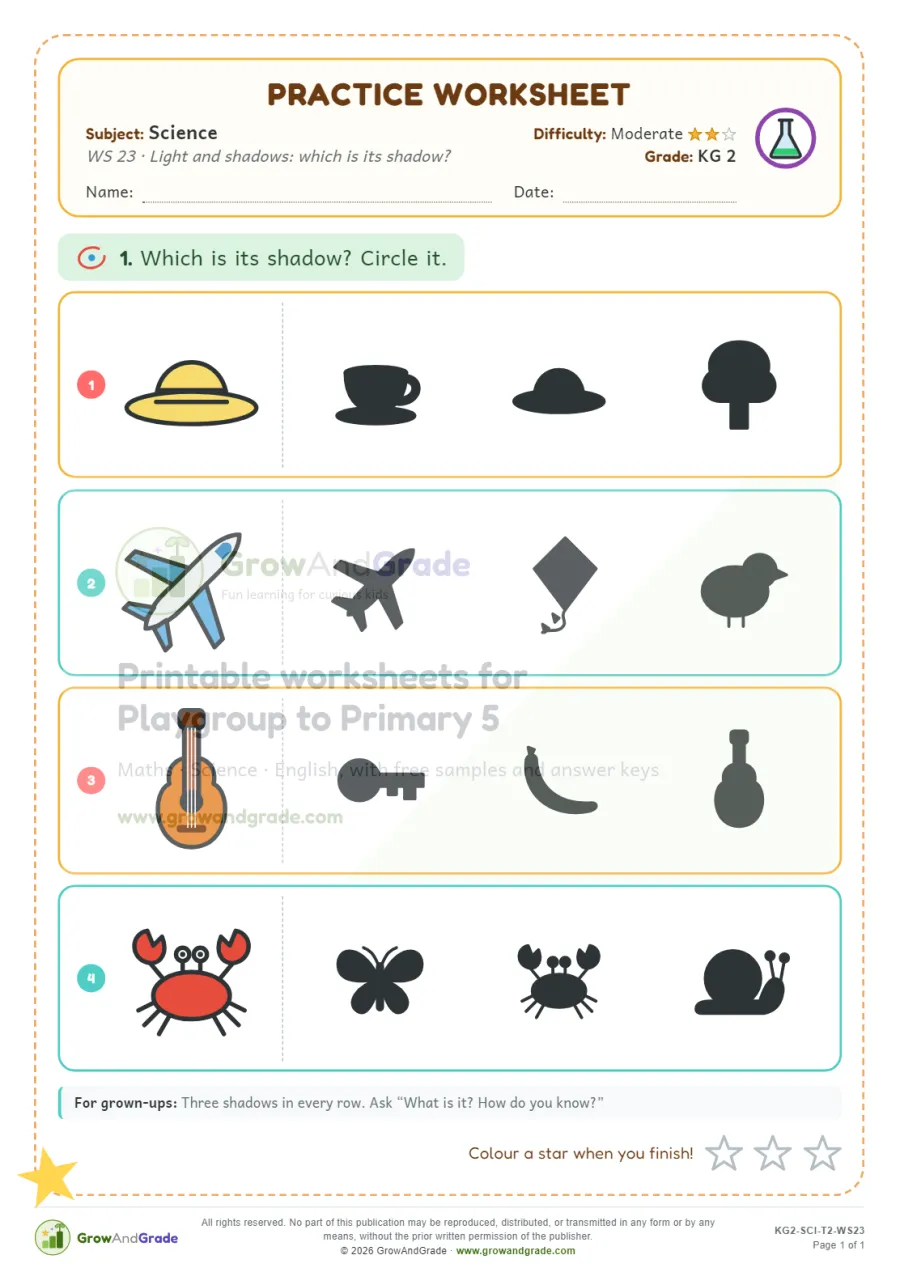
Kindergarten · Science · Moderate
Light and shadows: which is its shadow? (Moderate)
Free with account
FREE
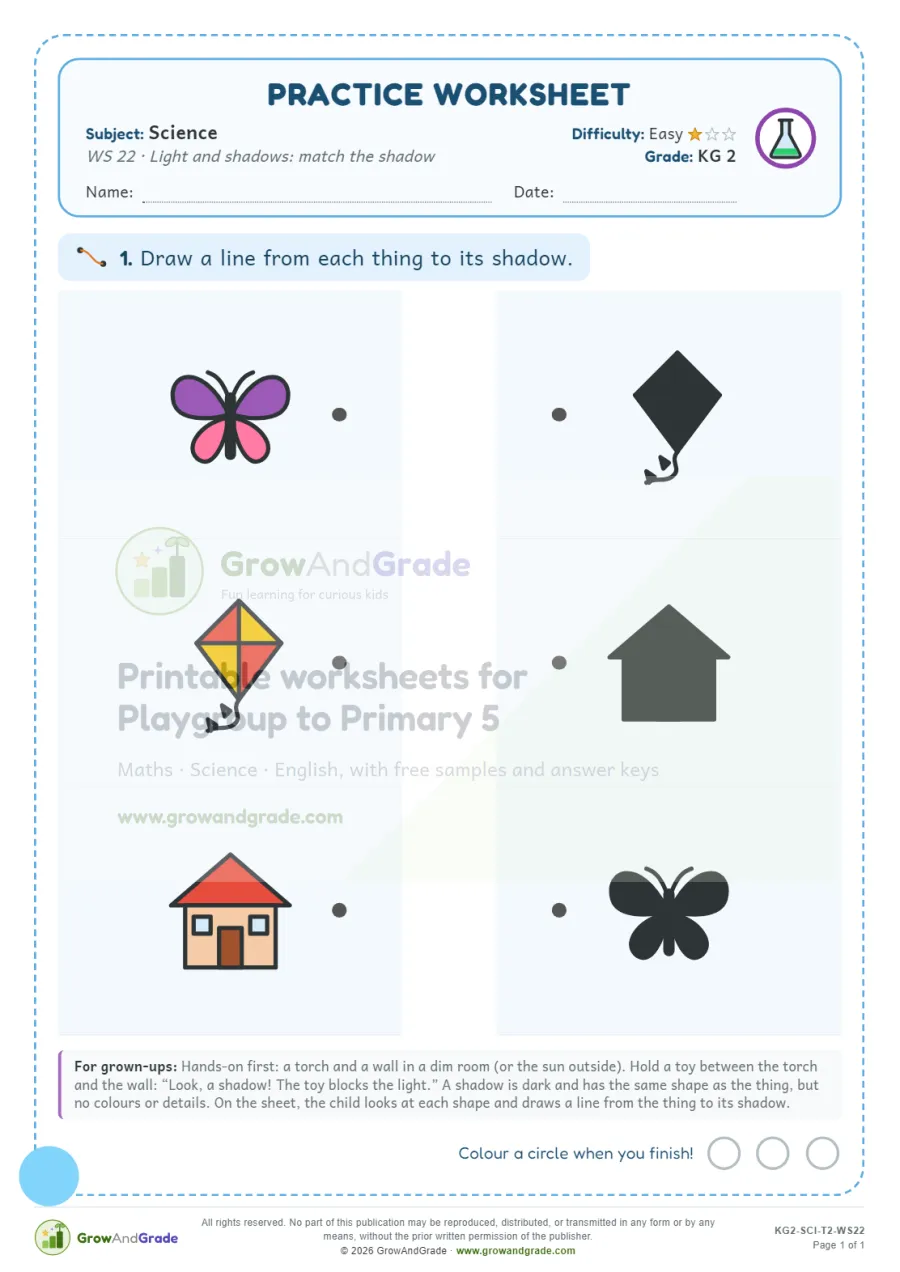
Kindergarten · Science · Easy
Light and shadows: match the shadow (Easy)
Free download
FREE
Kindergarten · Science · Easy