
 Page 1 of 1 · watermarked preview
FREE
Easy level Answer key included
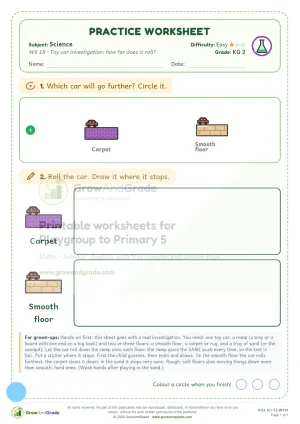
Kindergarten Science: Toy car investigation: how far does it roll? (Easy)
Toy car investigation: how far does it roll?. A printable Kindergarten 2 Science worksheet for ages 4½–5½, easy level. The child predicts where a toy car will roll furthest, tests it on different floors with the same push, and records where it stopped (investigate and record).
- Grade
- Kindergarten (Kindergarten 2)
- Ages
- 4–5
- Subject
- Science
- Topic
- Forces
- Level
- Easy
- Pages
- 1
- Format
- PDF (A4 / Letter)
- Answer key
- Yes
Get it in a pack
Every level of each worksheet and the answer keys, for less than the sheets one by one.
Term 2 pack
Save 38%All of Kindergarten Term 2
Science · every unit of the term
$7.99 Bought separately $12.87
About this worksheet
What your child practises: The child predicts where a toy car will roll furthest, tests it on different floors with the same push, and records where it stopped (investigate and record).
How to use it: Hands-on first: this sheet goes with a real investigation. You need: one toy car, a ramp (a tray or a board with one end on a big book) and two or three floors: a smooth floor, a carpet or rug, and a tray of sand (or the sandpit). Let the car roll down the ramp onto each floor: the ramp gives the SAME push every time, so the test is fair. Put a sticker where it stops. First the child guesses, then tests and draws. On the smooth floor the car rolls furthest; the carpet slows it down; in the sand it stops very soon. Rough, soft floors slow moving things down more than smooth, hard ones. (Wash hands after playing in the sand.)
Level: Easy, for children working with lots of help. This worksheet also comes in Moderate and Difficult levels.
What's included: 1 printable A4 page and an answer key.
Skills practised
- Forces: a rough surface slows a moving thing down more than a smooth one
- Working scientifically: predict, test fairly, observe, record
Curriculum links
- Next Generation Science Standards K-PS2-1: compare the effects of pushes on the motion of an object
- EYFS Early Learning Goal The Natural World: explore the natural world around them
- Development Matters (EYFS): explore how things work
- Cambridge Early Years: Understanding the world (scientific thinking) (EY2–EY3)
- Pearson iPrimary Early Years: The World Around Us (R2)
These show where the worksheet fits in each curriculum. They are a guide, not an official endorsement.
Print at home or in class on A4 or Letter paper. The answer key is a separate PDF so children can work without seeing the answers.
Rate this worksheet
Sign in to rate this worksheet after you've used it. Ratings come only from families and teachers who downloaded it.
Part of a learning unit · Term 2: Sentences & numbers to 20
Push and pull
- Push or pull? Sort the pictures (Easy)
- Push or pull in the playground: circle it (Easy)
- Toy car investigation: how far does it roll? (Easy) (this worksheet)
Work through them in order: each one builds on the one before.
More Science worksheets
See all
FREE · LOGIN
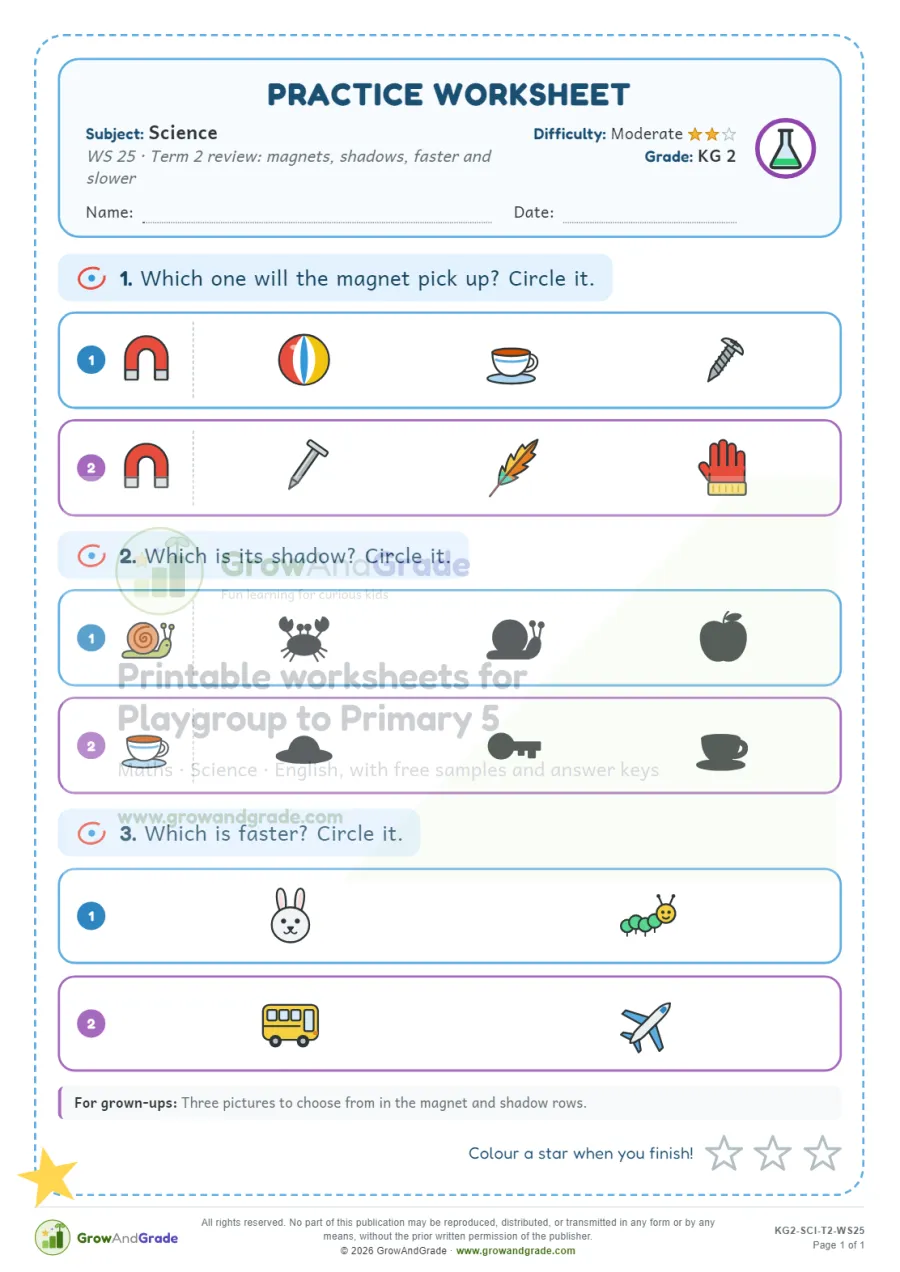
Kindergarten · Science · Moderate
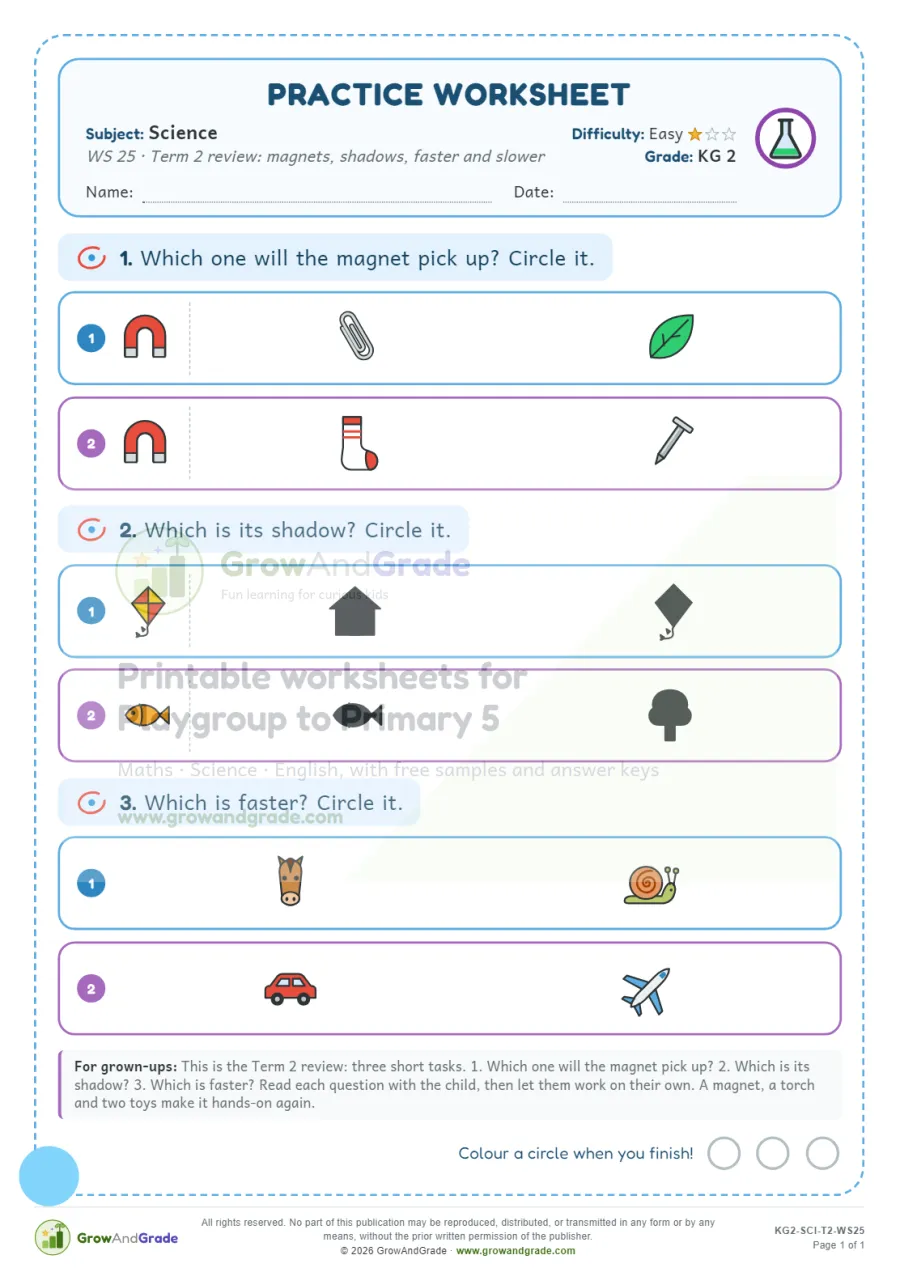
Term 2 review: magnets, shadows, faster and slower (Moderate)
Free with account
PREMIUM
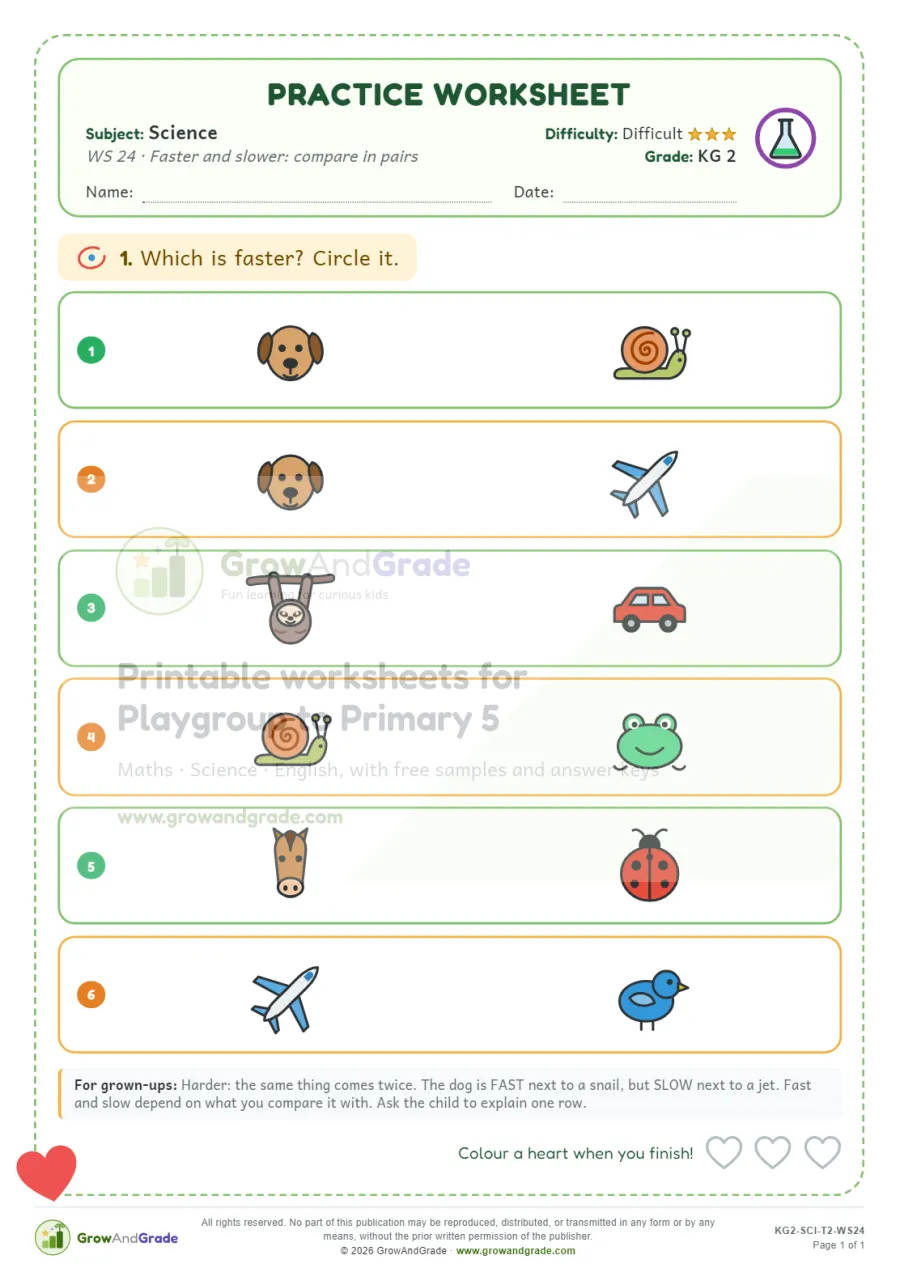
Kindergarten · Science · Difficult
Faster and slower: compare in pairs (Difficult)
$0.99
PREMIUM
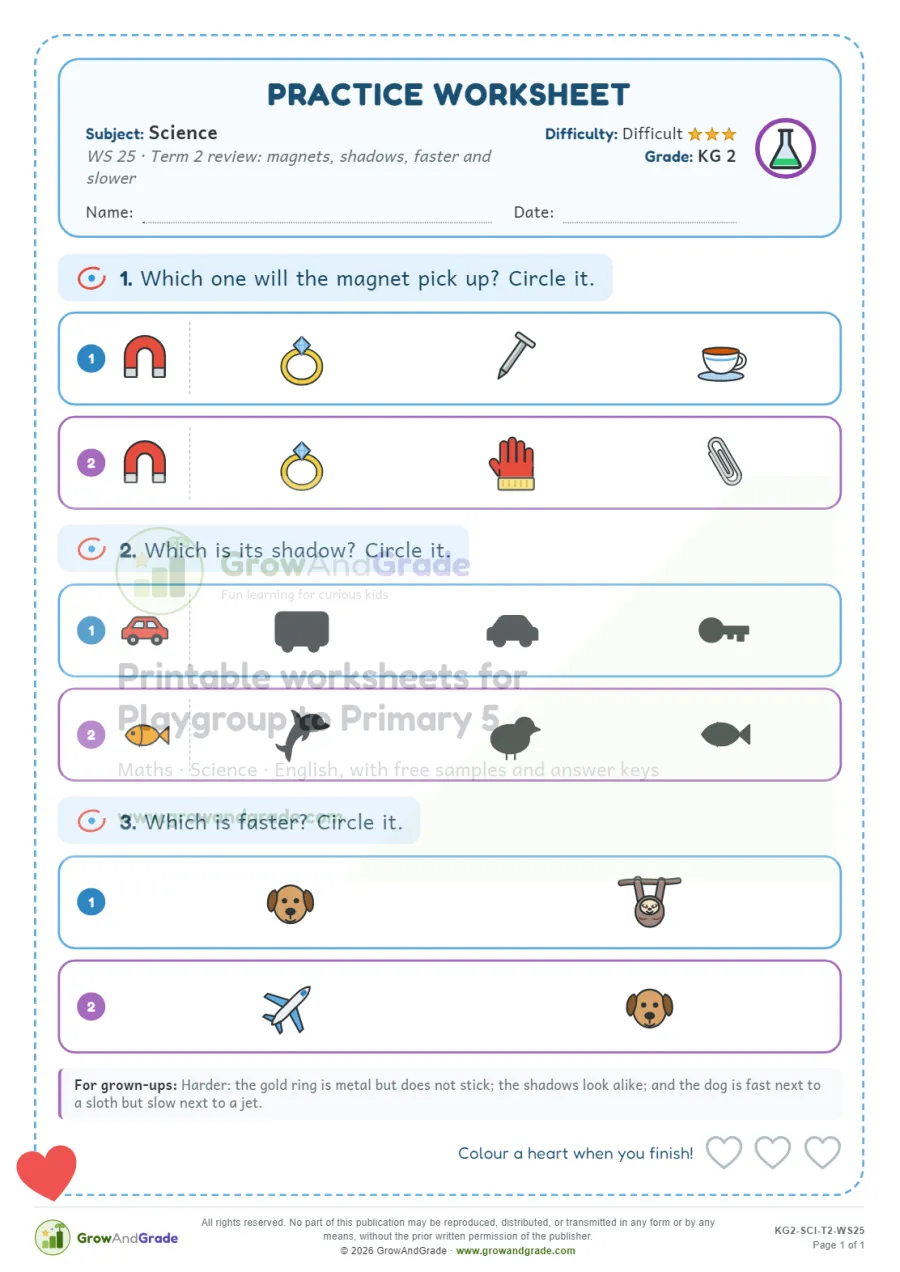
Kindergarten · Science · Difficult
Term 2 review: magnets, shadows, faster and slower (Difficult)
$0.99
FREE
Kindergarten · Science · Easy