Unit 6 pack
Save 24%Suited to a habitat and Term 1 review
Grade 2 · Term 1
$2.99 Bought separately $3.96
 Page 1 of 1 · watermarked preview
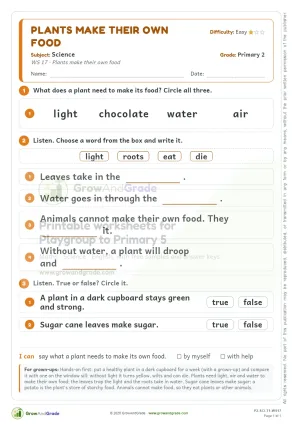
Plants make their own food. A printable Primary 2 Science worksheet for ages 6½–7½, easy level. The child knows that plants make their own food using light, air and water (leaves take in light, roots take in water), that the food is sugar, stored as starch in a potato, and that animals cannot make food so they eat other living things.
Every level of each worksheet and the answer keys, for less than the sheets one by one.
Suited to a habitat and Term 1 review
Grade 2 · Term 1
$2.99 Bought separately $3.96
All of Grade 2 Term 1
Science · every unit of the term
$11.99 Bought separately $19.80
What your child practises: The child knows that plants make their own food using light, air and water (leaves take in light, roots take in water), that the food is sugar, stored as starch in a potato, and that animals cannot make food so they eat other living things.
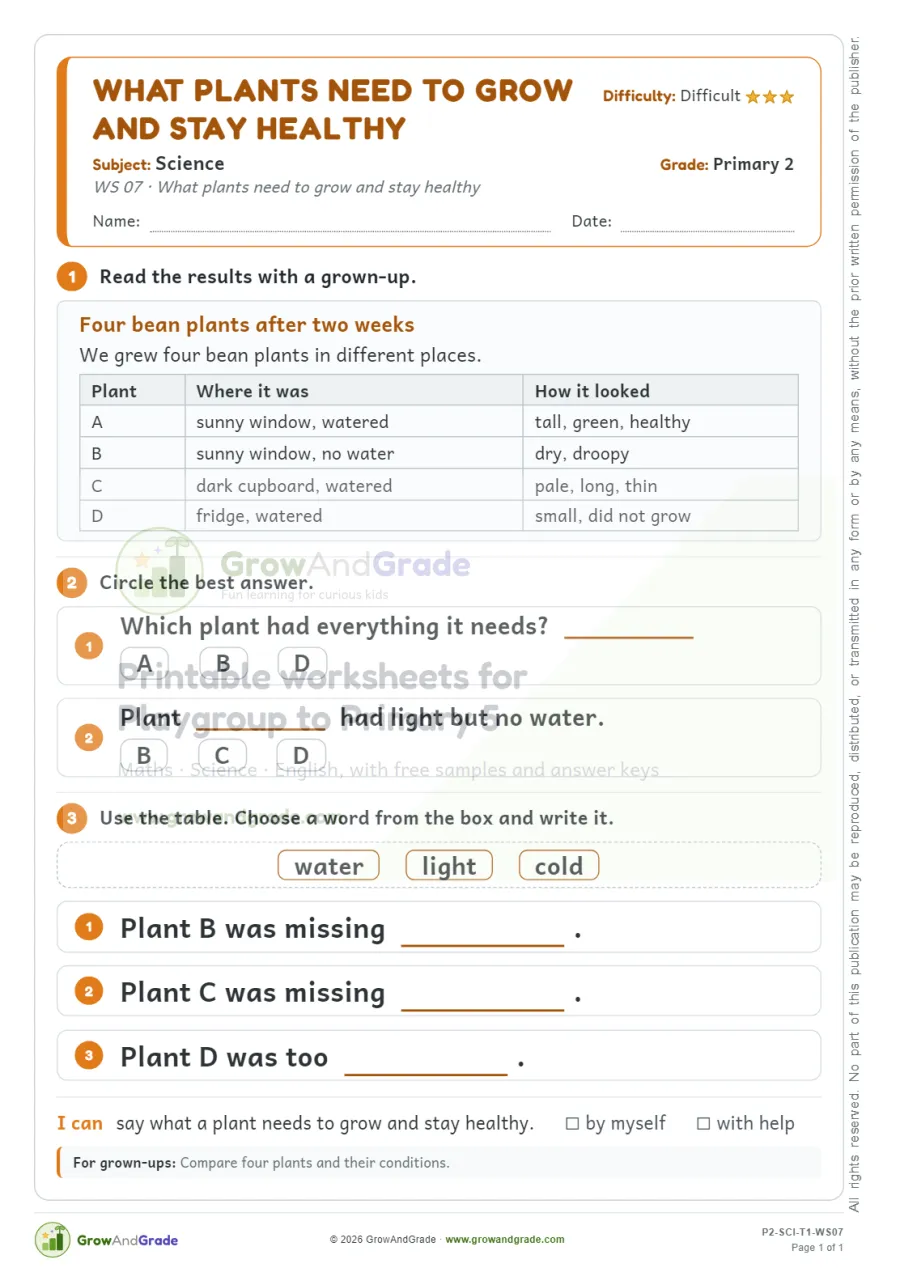
How to use it: Hands-on first: put a healthy plant in a dark cupboard for a week (with a grown-up) and compare it with one on the window sill: without light it turns yellow, wilts and can die. Plants need light, air and water to make their own food; the leaves trap the light and the roots take in water. Sugar cane leaves make sugar; a potato is the plant's store of starchy food. Animals cannot make food, so they eat plants or other animals.
Level: Easy, for children working with lots of help. This worksheet also comes in Moderate and Difficult levels.
What's included: 1 printable A4 page and an answer key.
These show where the worksheet fits in each curriculum. They are a guide, not an official endorsement.
Print at home or in class on A4 or Letter paper. The answer key is a separate PDF so children can work without seeing the answers.
Sign in to rate this worksheet after you've used it. Ratings come only from families and teachers who downloaded it.
Part of a learning unit · Term 1: Bridge & foundation
Work through them in order: each one builds on the one before.